
Journal
Leather Patina: How It Develops and What It Means
Understand how leather patina develops through light, touch, friction, and care, how it differs from dirt or damage, and how to let it evolve responsibly.
- Published
- Updated
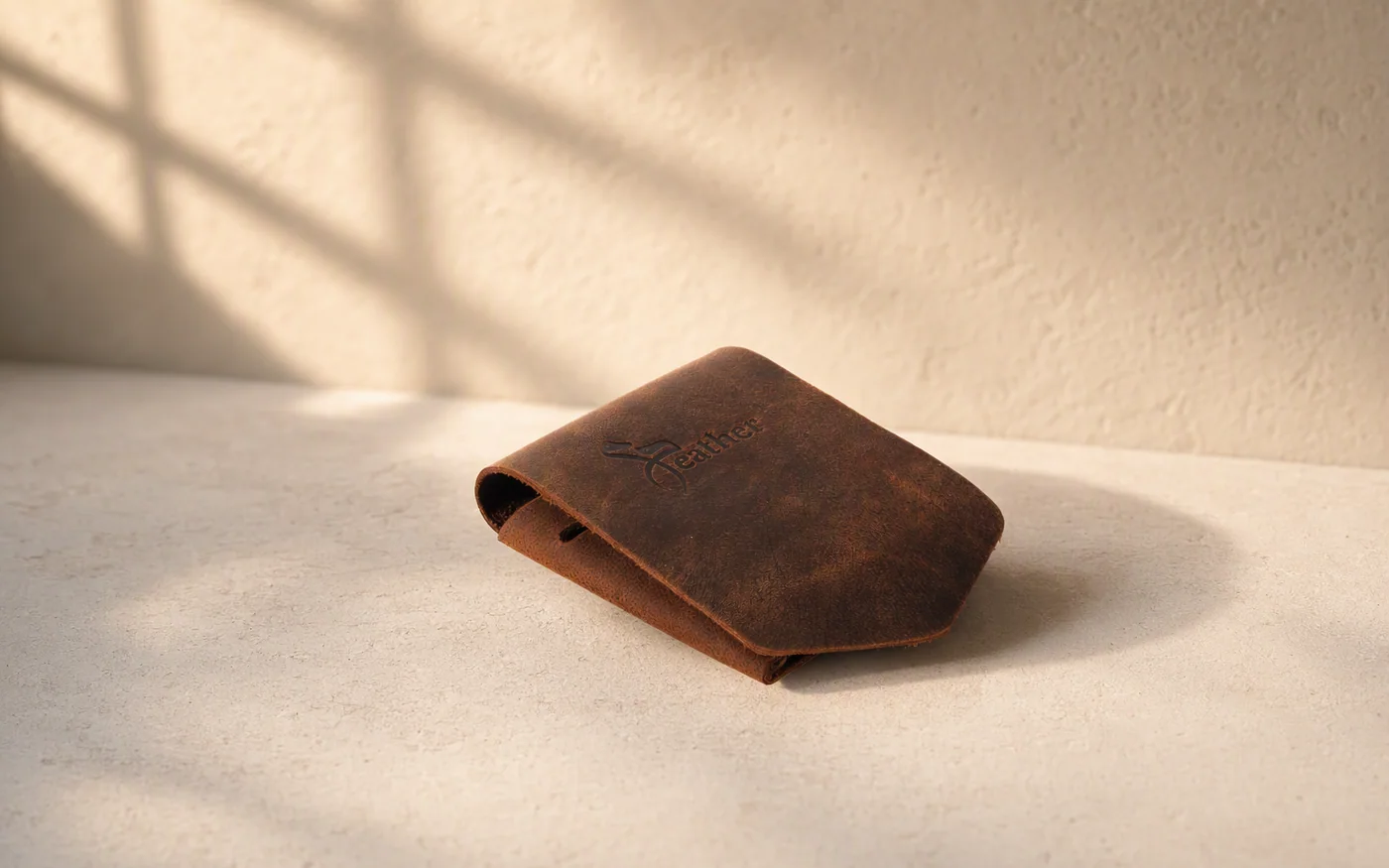
Patina is change, not a single look
Patina describes the gradual visual and tactile change that some leather develops through handling, movement, light, and the oils naturally transferred by touch. It may appear as deeper colour, greater sheen on raised areas, softer folds, or small variations around edges and pockets. The result depends on the leather and its finish, so not every piece will age in the same way.
Some protective finishes are designed to resist visible change and staining. More absorbent finishes may respond sooner and less uniformly. Neither response is inherently better. The useful question is whether the finish suits the way the object will be used and whether the owner is comfortable with variation becoming part of its appearance.
What shapes the surface over time
Light, friction, moisture, handling, and storage all influence change. The corners of a wallet meet pockets and hands more often than its centre, so they can darken or polish first. A bag carried on one side may show an uneven pattern of contact. These differences record use, but they can also be limited by rotating contact points, avoiding overfilling, and storing the piece without pressure.
Colour also behaves differently across hides and finishes. Natural grain and subtle tonal variation may become more visible, while surface coatings can keep colour steadier. Product photography captures one moment, not a guaranteed future shade. If a consistent appearance is important, ask about the finish and care expectations before choosing the piece.
- Frequent touch can deepen colour and increase sheen in exposed areas.
- Friction affects corners, folds, handles, and pocket-facing surfaces first.
- Sunlight can alter colour; prolonged direct exposure should still be avoided.
- Conditioning may darken some leathers and should never be used merely to force age.
Patina, dirt, and damage are different
A pleasing change in tone does not make every mark desirable. Surface grime, sticky residue, mould, dye transfer, deep cracking, torn fibres, failed stitching, and loose hardware are cleaning or repair concerns. Calling them patina can delay the action needed to keep a piece usable. Smell, texture, instability, and rapid change are useful warning signs when appearance alone is ambiguous.
Water marks and scratches sit between categories because their effect depends on depth, location, and finish. A shallow rub may blend into later wear, while a cut through the surface weakens the material. Avoid home remedies intended to erase a mark immediately. Gentle cleaning or a professional assessment is safer than forcing the surrounding leather to match the damaged area.
Let age develop without accelerating harm
The most convincing patina comes from ordinary, attentive use. Handle the piece with reasonably clean hands, keep it away from unnecessary moisture and heat, and remove dust before it becomes abrasive. Rotate what you carry and avoid stretching pockets beyond their intended capacity. These habits allow change while reducing stress that shortens useful life.
Do not place leather in direct sun, apply oil repeatedly, wet it, or rub it aggressively to create an aged appearance. Those shortcuts can produce uneven colour, weakened fibres, residue, or permanent distortion. Patina is not a treatment to complete in a weekend; it is the visible consequence of time, use, material, and care interacting.
Choosing with future wear in mind
When comparing pieces, look beyond the new surface. Consider where the object will travel, how often it will be handled, whether it will share a pocket with keys, and how much variation you enjoy. A lighter, absorbent finish may display marks readily; a protected darker finish may keep a more stable appearance. Ask direct questions when the product description does not explain the finish.
A changing surface can make an everyday object feel specific to its owner, but longevity still depends on construction, suitable use, maintenance, and timely repair. Patina adds a record of use; it does not prove quality on its own. The best outcome is not the darkest or most dramatic surface, but a piece that continues to work while ageing in a way its owner understands.